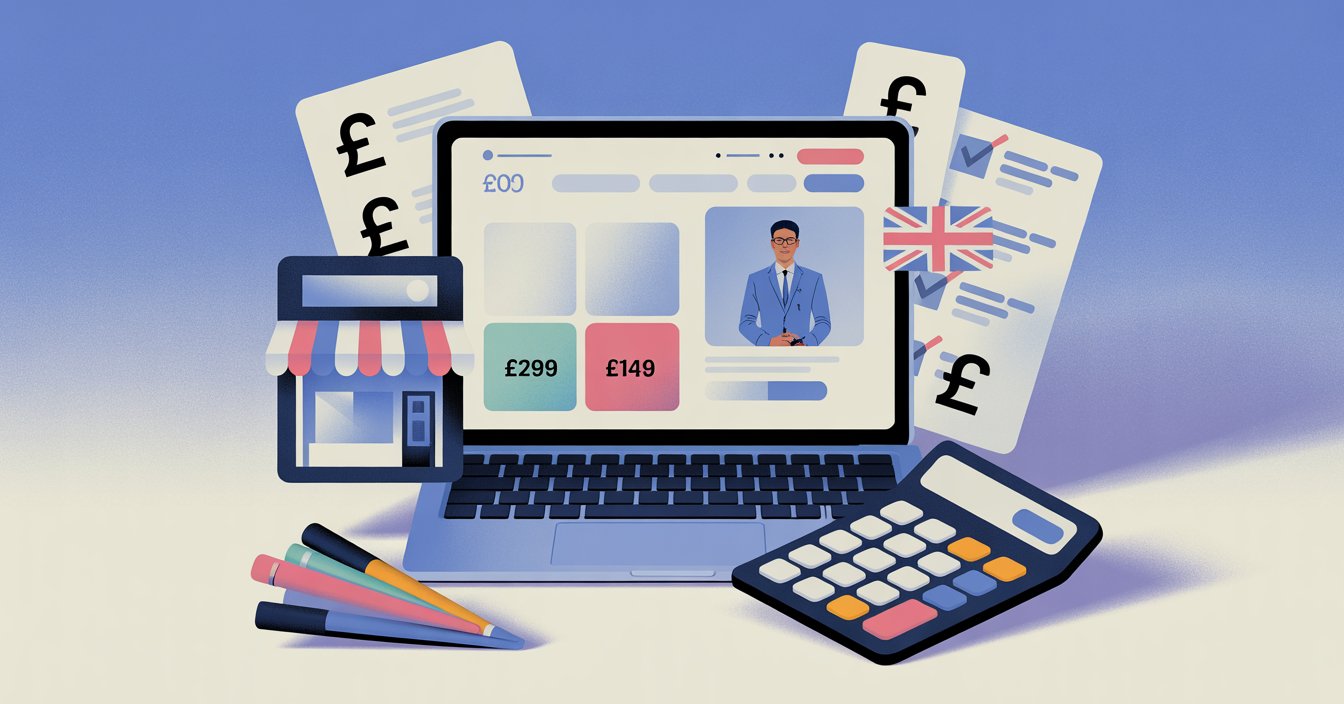
What Should a Small Business Website Cost in 2026? A Realistic UK Guide
‘How much does a website cost?’ It’s a bit like asking, ‘How much does a car cost?’ Are you after a reliable run-around to get you from A to B, or a high-performance machine built for the fast lane? The answer, of course, is: it depends.
You’ve probably seen the same confusing picture we have. Quotes for a ‘small business website’ can swing from a few hundred pounds on a freelancer marketplace to tens of thousands from a city-centre agency. It’s a minefield for any business owner trying to make a smart investment.
At LJ Media, we believe in transparency. We’re not here to sell you the cheapest option, because cheap often becomes expensive down the line. We’re here to help you understand what you’re paying for and to build a website that delivers a genuine return on investment. This guide will demystify website pricing in the UK for 2026, giving you the knowledge to budget effectively and choose the right partner for the job.
What Really Drives the Cost of a Website?
Understanding the price tag means looking under the bonnet. Several key factors determine the scope, complexity, and ultimately, the cost of your website project.
1. Design: Custom vs. Template
• Template-based sites: Using a pre-designed template (from platforms like WordPress, Squarespace, or Shopify) is the most budget-friendly route. It’s faster, but you’re limited by the template’s structure and design options. It can be a good starting point, but it’s harder to stand out.
• Custom-designed sites: This is where a designer creates a unique look and feel just for your brand. It involves a deeper discovery process, wireframing, and creating a bespoke user experience (UX) and user interface (UI). It costs more, but the result is a website that is uniquely yours and perfectly aligned with your business goals.
2. Number of Pages & Complexity
A simple five-page ‘brochure’ site (Home, About, Services, Blog, Contact) will naturally cost less than a 50-page site with multiple service lines, team profiles, and in-depth case studies. The more complex the structure and the more content that needs to be designed and built, the higher the investment.
3. E-commerce Functionality
Want to sell online? That’s a whole new level of complexity. An e-commerce site requires secure payment gateways, product management systems, customer accounts, shipping logic, and inventory tracking. A simple store with a handful of products is one thing; a complex store with thousands of variations, international shipping, and subscription options is another beast entirely. According to a 2025 report by Statista, UK e-commerce revenue is projected to reach over £200 billion by 2027, making a robust online store a critical investment for retail businesses .
4. Content Management System (CMS)
A CMS allows you to update your website’s content without needing to code. WordPress is the world’s most popular CMS for a reason – it’s powerful and flexible. While the software itself is free, the cost comes from customising it to your needs, installing and configuring plugins, and ensuring it’s secure and optimised. Other platforms like Craft CMS or headless CMS solutions offer different benefits but often come with higher development costs.
5. Copywriting, Photography, and SEO
A beautiful website with bad content is like a sports car with no engine. Professional copywriting that speaks to your audience and is optimised for search engines is crucial. Likewise, high-quality, professional photography and videography make a huge difference to how your brand is perceived. These are often separate costs but are vital for a successful website. A 2024 study by the Nielsen Norman Group found that users form a design opinion in as little as 50 milliseconds, highlighting the immediate impact of visual presentation .
UK Website Price Ranges for 2026: A Realistic Breakdown
Let’s get down to brass tacks. Here are some realistic price bands for different types of small business websites in the UK, when working with a professional agency like ours.
| Website Type | Typical Price Range (UK Agency) | What You Get |
| Brochure Website | £3,000 – £6,000 | A professional, mobile-responsive website with 5-10 pages. Based on a customised premium template. Includes basic on-page SEO setup and a CMS for easy updates. Ideal for establishing credibility and a professional online presence. |
| Lead Generation Website | £6,000 – £12,000 | A custom-designed website with up to 20 pages, focused on converting visitors into leads. Includes blog functionality, clear calls-to-action, integration with your CRM, and a more in-depth SEO strategy. This is a marketing asset designed to grow your business. |
| Small E-commerce Website | £8,000 – £20,000+ | A custom-designed online store with up to 50 products. Includes secure payment integration, product and inventory management, and customer accounts. The price increases with complexity, number of products, and specific integrations. |
| Bespoke Web Application | £20,000+ | For when you need something completely unique, like a custom booking system, a client portal, or a unique online tool. This is a full-scale software development project. |
Why the Cheapest Quote is a Red Flag
A £500 website might sound tempting, but it’s often a false economy. These ultra-low-cost sites are typically built on restrictive platforms, have little to no strategy behind them, are poorly optimised for search engines, and offer no ongoing support.
Within a year, you’ll likely find it’s not generating leads, it’s impossible to update, and it doesn’t reflect the quality of your business. You’ll end up paying a professional agency to rebuild it properly, costing you more in the long run. Think of your website as a key member of your sales team – you wouldn’t hire the cheapest person you could find and hope for the best.
Beyond the Build: Don’t Forget Ongoing Costs
Launching your website is just the beginning. To keep it secure, fast, and effective, you need to budget for ongoing maintenance. This typically includes:
• Hosting: Quality hosting ensures your site is fast and reliable. Expect to pay £20-£50 per month.
• Maintenance & Security: Regular software updates, security scans, and backups are essential to protect your site from hackers. This can range from £50-£200 per month.
• SEO & Content Marketing: To actively grow your traffic and generate leads, you’ll need an ongoing SEO and content strategy. This is a more significant investment, often starting from £500 per month.
Our Approach: Building Strategic Websites That Work
At LJ Media, we don’t just build websites; we build marketing assets. Our process starts with understanding your business goals. Who are your customers? What do you want them to do? How will your website help you achieve your commercial objectives?
We combine strategic thinking with expert design and development to create websites that not only look great but also perform. We build on WordPress for its flexibility and power, ensuring you have a scalable platform that can grow with your business. And we’re transparent about our pricing every step of the way.
Your website is your digital storefront, your 24/7 salesperson, and the foundation of your online marketing. Investing in a professional, strategic website is one of the smartest moves you can make for your business’s future.
Ready to Build a Website That Gets Results?
If you’re tired of confusing quotes and want a transparent, strategic partner to build your new website, we’re here to help. Let’s talk about your project and figure out the best way to help your business shine online.
Book a no-obligation strategy call today and let’s get started.
References
[1] Statista. (2025). eCommerce – United Kingdom.
[2] Nielsen Norman Group. (2024 ). First Impressions Matter: The Importance of Great Visual Design.